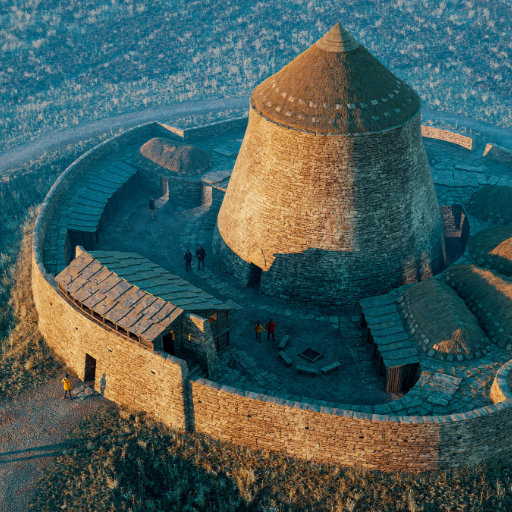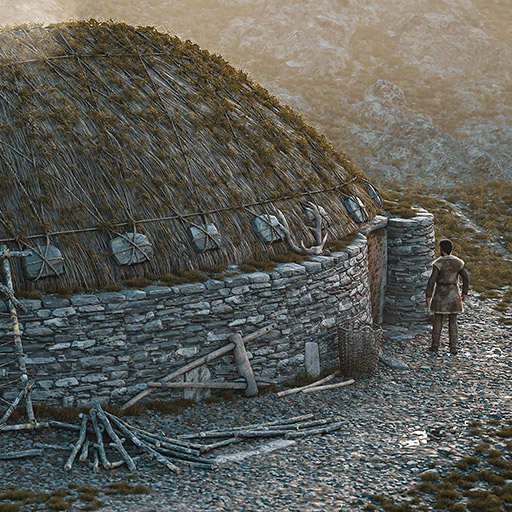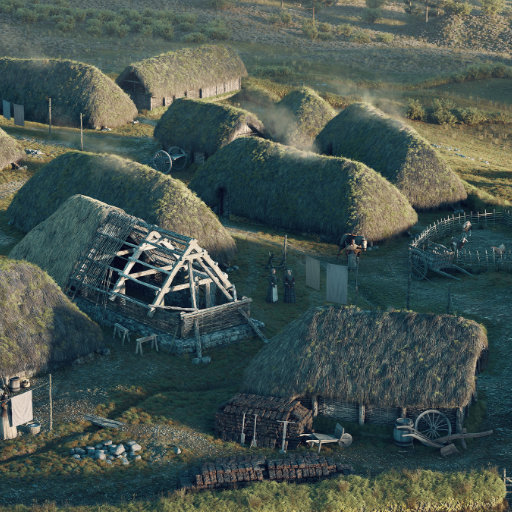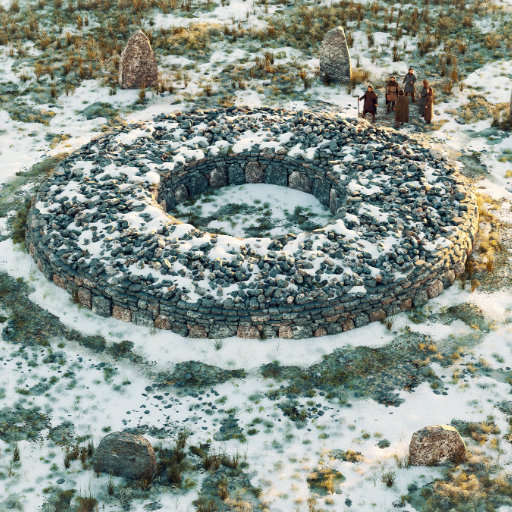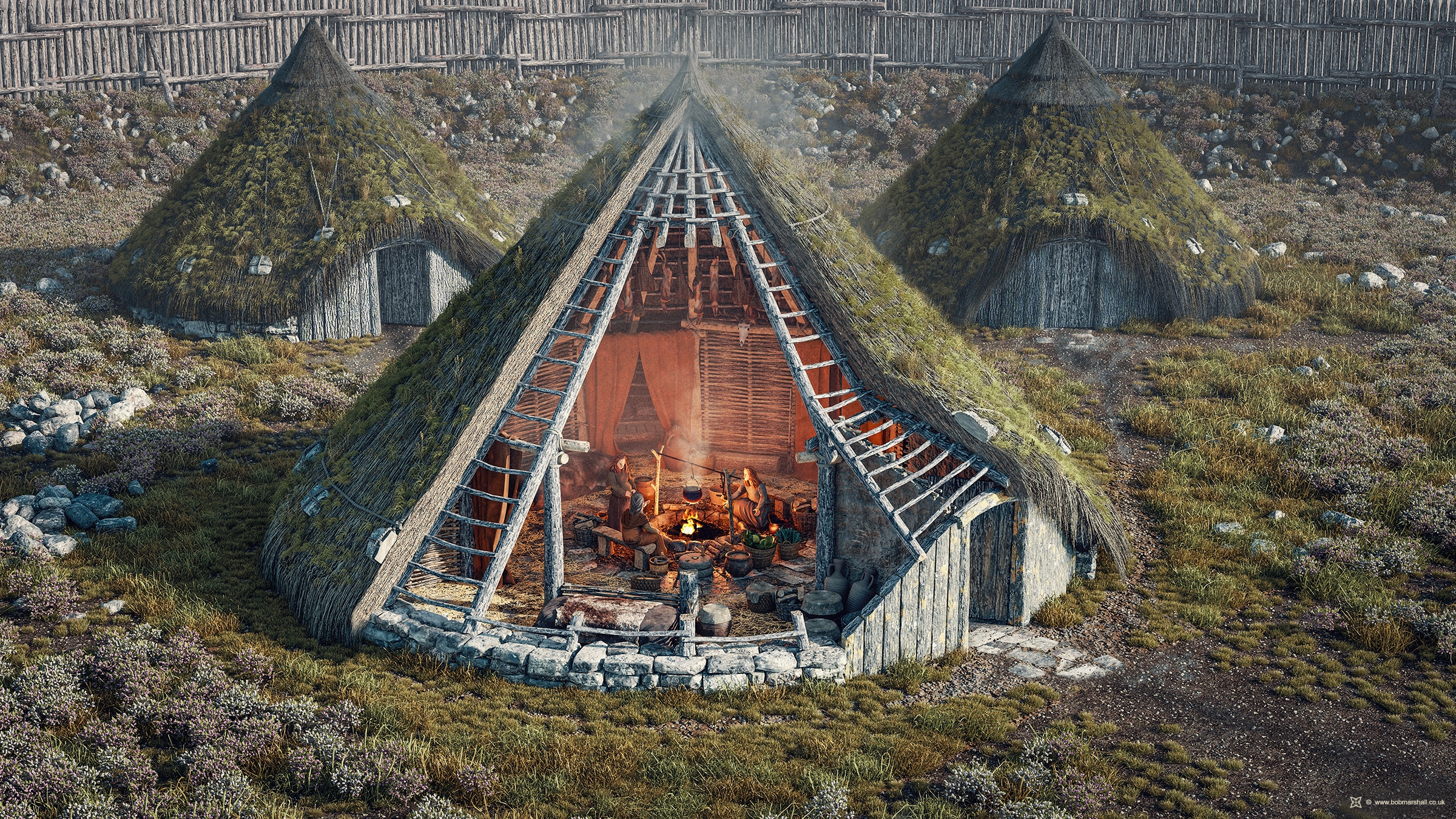
A cutaway reconstruction illustration depicting a typical Iron Age roundhouse or hut dwelling in Scotland (c1200 – c550 BC). These were circular homes with a timber frame, wattle-and-daub walls, and a steep conical thatched roof. It usually had a single doorway, often facing away from the prevailing wind. Inside, the space was simple and open, with a central hearth for cooking, warmth, and light. Every day life happened around that fire: people worked, ate, repaired tools, wove cloth, and stored grain and pots in the same main room. Larger roundhouses could also have low sleeping or storage areas around the walls, with the family sharing the central space. The floor was often packed earth, clay, or timber-based, and the walls were sometimes daubed and sealed for weatherproofing.
How this image was made
Software and tools used: Blender 3D, Photoshop
About the images in my portfolio
You may notice subtle shapes and patterns in some of the images in my online portfolio, affecting their visual quality. I am experimenting with free tools developed by researchers at the University of Chicago to help artists protect their work from unauthorised AI training. It subtly alters images in ways that are almost invisible to people but can confuse AI models, making it much harder for them to learn and reproduce an artist's distinctive style.
Personal Work
Artist:
Bob Marshall.April, 2020
Creative Commons CC BY-NC-ND 4.0. Reusers may copy and distribute the image in any medium or format. Credit must be given to the creator. Only non-commercial uses of the work are permitted. No derivatives or adaptations of the work are permitted.
My 3D models cannot be shared or licensed for other use due to contractual agreements with my clients and, in some cases, other stakeholders. More information can be found on my Licensing information page.